
~ In the Hudson Valley ~
Craniosacral Therapy
Massage > Craniosacral Therapy
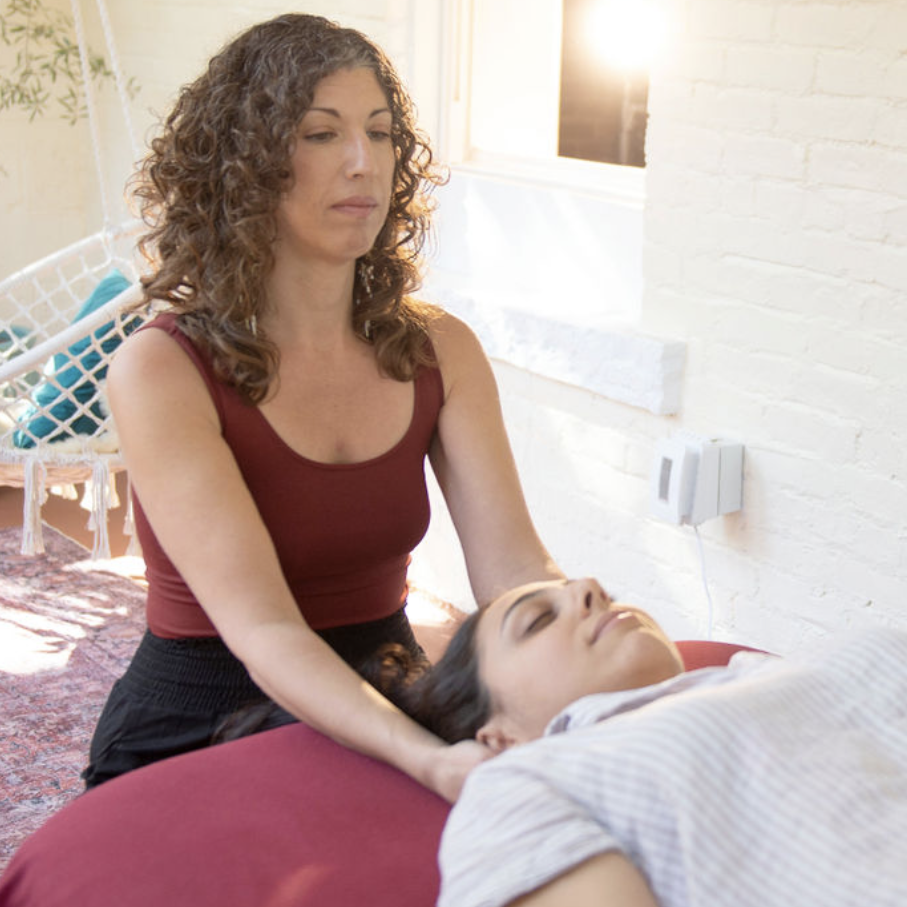
Craniosacral Therapy (CST) is a gentle, hands-on modality that supports your body’s ability to return to balance—especially through the nervous system. Rather than “fixing” or forcing the body, CST uses light, listening touch to help release patterns of tension and protection that can live in the tissues, the breath, and the overall system.
How it works:
Your body holds an inherent intelligence, an inner physician who is always moving toward healing and regulation. In CST, we work with the craniosacral system (the membranes and fluids that surround and protect the brain and spinal cord, and their relationship to the skull, spine, and sacrum). With subtle contact, we listen for areas that feel restricted, compressed, or over-held, and we invite the system to soften and reorganize. Many people experience this as a deep settling of the nervous system often paired with a sense of spaciousness, clarity, and relief.
Who it’s for:
CST is for anyone who feels like their system is doing “too much” or not recovering well physically, emotionally, or energetically. People often seek this work when they’re carrying chronic stress, feeling disconnected from their body, experiencing persistent tension patterns, or moving through a life transition. It is beneficial for prevention, maintenance, and learning what it feels like to be deeply regulated.
What you might come for (supportive care):
nervous system regulation, stress, anxiety, overwhelm
headaches/migraines and tension patterns
fatigue, burnout, difficulty resting or sleeping
jaw/neck/shoulder holding and whole-body tightness
recovery support after a demanding season of life
emotional processing and integration when words aren’t enough
Each session is quiet, attentive, and deeply individualized. You remain fully clothed, and the pace is slow enough for your body to feel safe and heard.
F.A.Q.
-
Most people describe CST as deeply calming. like their whole system exhales. You may notice warmth, tingling, gentle waves of release, subtle movements, or a sense of spaciousness. Some sessions feel very subtle; subtle does not mean ineffective.
-
No. You’re welcome to share what feels important, but CST can be especially supportive when you don’t want to explain everything with words. We can let your body lead the session through sensation and nervous system cues.
-
CST can support nearly anyone, especially those who:
feel chronically “wired,” anxious, or unable to fully relax
have longstanding tension patterns that don’t fully resolve with typical massage
are sensitive, overwhelmed, or going through a transition
want a somatic approach that supports both body and emotional integration
-
CST is not a medical treatment and I do not diagnose, yet many people use it as supportive care for migraines/headaches, chronic stress, fatigue, sleep issues, pain patterns, and recovery from burnout.
-
Some people feel noticeable shifts after one session. For deeper patterns, a short series often helps which I suggest a series of 4 sessions weekly so that the therapy can integrate.
-
Massage primarily works with muscles and soft tissue through varying pressure. CST works with a much lighter touch and focuses on nervous system regulation, subtle restrictions, and whole-system integration. Many clients love CST because it reaches places that “effort” can’t reach.
-
Wear loose fitting, comfortable clothing. Give yourself an hour to digest meals before arriving. Warm teas and water is always supportive to keeping the body open and receptive to the treatment.